Harold Mitchell (Mitch)
Harold Mitchell, known to everyone as Mitch, is a central figure in Tennessee Williams's A Streetcar Named Desire, a man whose quiet decency and capacity for devotion set him apart from Stanley Kowalski's other poker-playing friends, yet whose ultimate failure to stand by Blanche DuBois seals her destruction. He is introduced as a roughly dressed man in blue denim work clothes, about twenty-eight or thirty years old, who appears alongside Stanley in the opening scene carrying a bowling jacket. His role as a friend and co-worker of Stanley's—they served together in the Two-forty-first Engineers and work at the same plant—places him squarely within Stanley's world, but his character is defined by a sensitivity and a longing for connection that distinguish him from the coarser men around him.
Identity and Background
Mitch lives with his sick mother, a woman he describes as not expected to live long, and his devotion to her is the central fact of his life. He tells Stanley during the poker night that he ought to go home because his mother cannot sleep until he comes in, and he confesses that he will be alone when she dies. This filial piety gives him a gravity and a loneliness that Blanche immediately recognizes. He works on the precision bench in the spare parts department at the plant where Stanley travels, a job that Stella describes as not amounting to much, and he is the only one of Stanley's crowd, according to Stella, who is not likely to get anywhere. His physical presence is imposing—he weighs two hundred and seven pounds and stands six feet one and a half inches tall in his bare feet—but his manner is awkward and shy, and he is deeply self-conscious about his perspiration and his build.
Arc Through the Plot
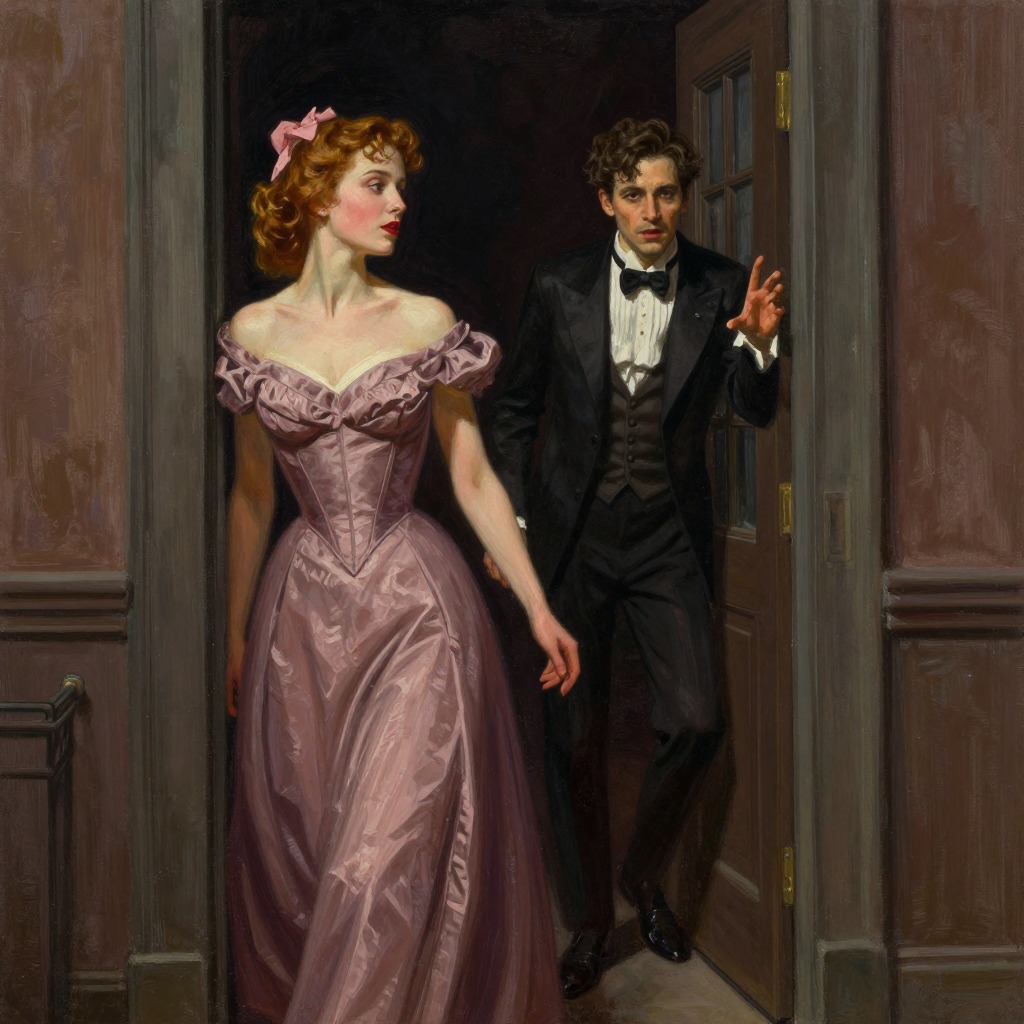
Mitch's trajectory in the play moves from tentative courtship to hopeful intimacy, then to disillusionment and rejection, and finally to a broken, silent presence at Blanche's departure. He first notices Blanche during the poker night, when he emerges from the bathroom and stares at her with evident interest. She in turn finds him superior to the other men, noting his sensitive look. Their subsequent conversation, in which he shows her the silver cigarette case inscribed with a line from Elizabeth Barrett Browning—"And if God choose, I shall but love thee better—after—death!"—given to him by a dying girl, establishes a bond of shared sorrow. Blanche tells him about her dead husband, Allan Grey, and the traumatic discovery of his homosexuality and his suicide, and Mitch responds with tenderness, saying, "You need somebody. And I need somebody, too. Could it be—you and me, Blanche?" This moment of mutual recognition seems to promise a new beginning.
Relationships and Conflict
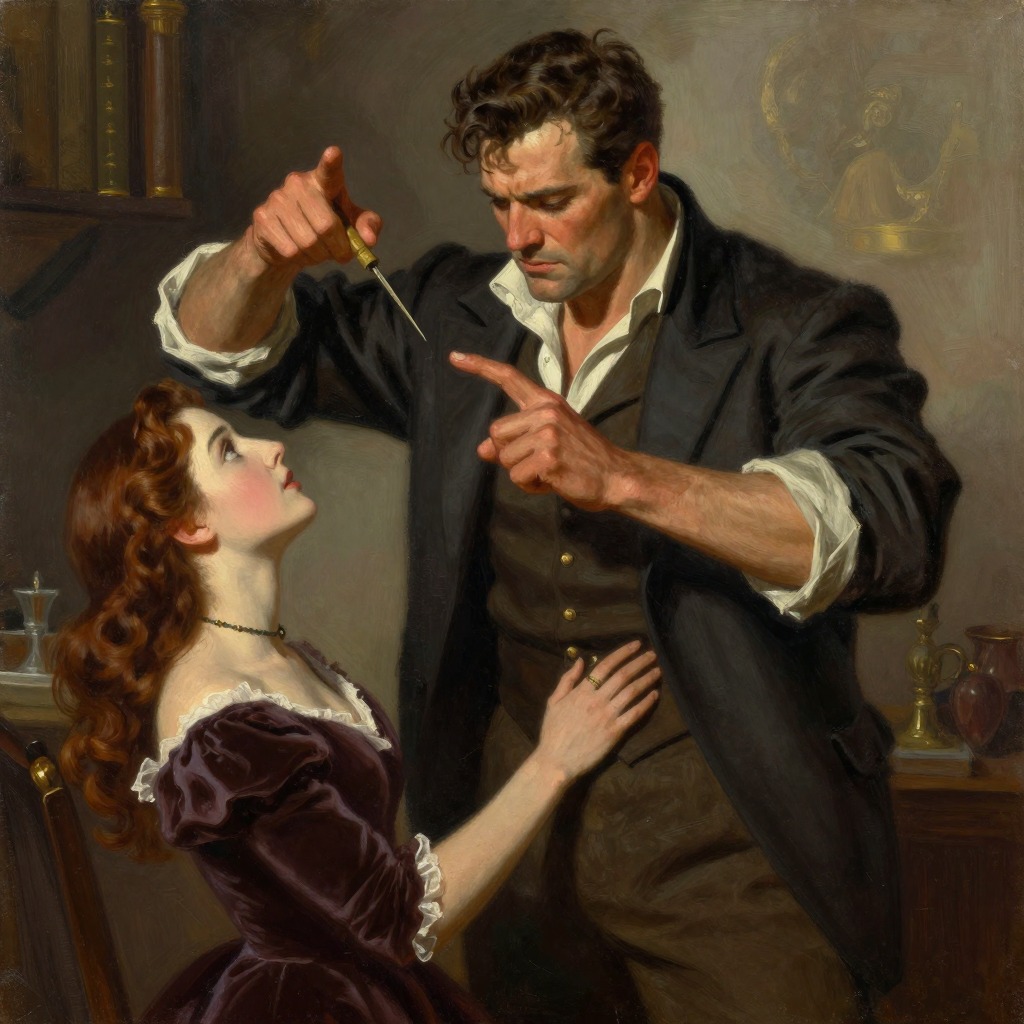
The relationship between Mitch and Blanche is built on a foundation of mutual need and deception. Blanche presents herself to him as a prim, old-fashioned schoolteacher, and he believes her, telling his mother about her and hoping to marry her. But Stanley, determined to destroy Blanche's influence, reveals to Mitch the truth about her past: her stay at the Flamingo Hotel, her reputation in Laurel, and her affair with a seventeen-year-old boy that led to her dismissal from teaching. Mitch confronts Blanche in Scene Nine, tearing the paper lantern off the light bulb to see her face clearly in the harsh light, and accuses her of lying to him. "You're not clean enough to bring in the house with my mother," he tells her, a line that devastates Blanche and reveals the limits of his love. His rejection is not merely personal but is rooted in the same social codes of respectability that Blanche herself has tried to manipulate.
Change and Ending
After the confrontation, Mitch undergoes a visible change. He appears at the poker game in the final scene, unshaven and silent, his gaze dissolved into space as Blanche's voice reaches him from the bedroom. When Stanley blocks his attempt to go to her, Mitch lunges and strikes at Stanley, but he is pushed back and collapses at the table, sobbing. This moment of violent grief is his last significant action in the play. He does not speak to Blanche as she is led away by the Doctor and the Matron; he remains seated, staring down at his hands on the table. His failure to intervene, to offer her the kindness she so desperately needs, completes the play's tragic arc. Mitch, who once represented a possible escape for Blanche, becomes another instrument of her destruction, not through malice but through weakness and a conventional horror at her past.
Thematic Significance
Mitch embodies the play's central tension between the desire for tenderness and the brutal force of social judgment. He is the only character who might have saved Blanche, and his failure to do so underscores the impossibility of genuine connection in a world governed by Stanley's values. His silver cigarette case, inscribed with a love sonnet, is a symbol of the romantic idealism that both he and Blanche cling to, but it is ultimately powerless against the raw facts of her history. Mitch's final, sobbing collapse at the poker table is a recognition of his own complicity in the violence that has destroyed Blanche, and it marks him as a tragic figure in his own right—a man who loved, but not enough.